
"Four Species"
3000 article(s) found

Introduction to Coffee for beginners: an explanation of some words in Coffee
Caramelization tester: this is the baking degree index used in the United States. The baking degree is expressed from the shallowest 100 to the deepest 25, meaning (the baking degree is about Agtron50). The determination relies on a special chromatic aberration judgment called Agtron M-Basic. Arabica species: together with Robsta species and Leiberia species, they are called the three primary species of coffee. The original farming is the cloak.

Brazil's four main varieties Honey treatment Faca Esheb boutique coffee beans planting geographical location
Dry incense can be said to be the most charming place of this bean. After grinding, you can obviously feel a kind of elegant floral fragrance, fresh and elegant, but it is not like Yega Xuefei's floral fragrance rising all the time, but a feeling of eloquence. In addition, there is obvious honey sweet fragrance, the overall dry fragrance is low and melodious, the honey sweet fragrance is more prominent after water injection, and the entrance of the coffee is very gently sour across the mouth.

There are four types of coffee trees in the world.
Coffee comes from Ethiopian curry. In Colombia, it was brought by a priest from the French Antilles via Venezuela in 1808. At present, Colombia is the fourth largest coffee producer in the world, behind Brazil, Vietnam and Indonesia. Finally, I have an opportunity to witness the formation of coffee. This is a visit to QUINDIO, Colombia.

Aricha Coffee processing Plant Aricha Coffee relationship
For more information on coffee beans, please follow the coffee workshop (Wechat official account cafe_style). The Kebel Aricha processing plant is located in Gedeo, south of Ethiopia. The jurisdiction of this area is better known by Yega Sheffield and Kochere. The treatment plant is located four kilometers west of the city of Yegashafi, and there is a small place name, Guji.

A little knowledge about coffee trees how coffee trees grow and grow their own coffee trees.
Professional coffee knowledge exchange more coffee bean information Please follow the coffee workshop (Wechat official account cafe_style) there are more than 6000 species of coffee trees, most of which are tropical trees and shrubs. There are four main coffee trees in the world, of which only two are of real commercial value and are planted in large quantities, and the quality of the coffee beans is also better than that of other coffee trees.

Pacamara, a hybrid breed artificially bred in El Salvador, is a giant baby in the coffee world.
Pacamara is a hybrid bred in El Salvador in 1958. Its parents are Pacas (Pacas) and elephant bean (Maragogype). Pacamara is the combination of the first four letters of their parents: Paca+mara=Pacamara. Comparison between Pacamara fruit and bourbon fruit. The giant baby of the coffee world! Pacamara is characterized by its short tree shape and high yield.

Types and varieties of coffee
Coffee is a plant of the genus Coffea genus of Rubiaceae. According to the study of Chevalier,1947, there are 66 species in four groups, including 24 species in Eucoffea group, 18 species in Mascarocoffea group, 13 species in Paracoffea group and 11 species in Argocoffea group.

Introduction to Panamanian Coffee Flavor, Fine Coffee Manor, Jade Manor
The Panamanian flag was launched on November 3, 1904. The flag is rectangular and the ratio of length to width is 3:2. The flag consists of four rectangles of white, red and blue. White symbolizes peace; red and blue represent the former Panamanian Liberal Party and the Conservative Party respectively, and they are also symbols of the two parties' United struggle for the interests of the nation. The blue star on the white background on the upper left represents loyalty and integrity, and the red star on the white background on the lower right represents
Types and varieties of coffee
Coffee is a plant belonging to the genus Coffea in the Rubiaceae family. According to Chevalier (1947), the genus Coffea is divided into four groups with 66 species, including 24 species in Eucoffea group, 18 species in Mascarocoffea group, 13 species in Paracoffea group and 11 species in Argocoffea group

Characteristics of Brazilian Santos Coffee introduction of Brazilian boutique coffee bourbon species in that producing area of Santos, Brazil
The real bourbon Santos is the beans of the first few seasons of mocha coffee trees. The taste is comparable to that of high-end Yushan coffee. In the same coffee tree, only beans harvested in previous periods can be named bourbon. Three or four years later, the characteristics of beans gradually changed, and in the sixth year, they became Flat Bean Santos. Red Santos tastes sweet, bourbon Santos tastes bitter, Shinzo Santo

Ethiopia washed Sidamo G1 Honey language Micro-batch Coffee Bean grading, Price, Raw Bean and Baking
Professional baristas follow the Coffee Workshop (official Wechat account cafe_style) Coffee can be grown in Ethiopia in a variety of ways: from wild coffee forests and semi-developed lands, to traditionally operated plots of land to modern plantations. About 50% of the coffee is grown more than 1500 meters above sea level. Ethiopian coffee according to the above four no

How did Sidamo Honey Coffee come from? how to divide the grades of Sidamo coffee beans?
Professional barista communication please follow coffee workshop (Wechat official account cafe_style) washing: Grade-1;Grade-2 (G1G2) sun: Grade-1 and Grade-3Grade-5 (G1G3G4G5) production area: Ethiopia Oromia species: Ethiopia native species Haiba: 2000 treatment: washing factory name: coffee workshop site: Guangzhou Yuexiu Museum District Security

What kind of coffee do you have?
There are four kinds of coffee in the world, of which only two are of real commercial value and are planted in large quantities. One is the Elaraby species (ARABICA), and the other is the Robasta species (KOBUSTA). Different varieties of coffee beans have different tastes, but even the same varieties of coffee trees grow coffee due to the influence of different soils, different climates, etc.

Panamanian Cupid Coffee Flavor Taste Manor Features Fine Coffee Introduction
In 1534, King Carlos I of Spain ordered a survey of the Isthmus of Panama, and the Spanish prepared for it by paving a cobblestone post road along the ridge across the Isthmus. Beginning in the 18th century, Spanish colonial authorities explored four alternative sites: the Isthmus of Tehuantepec in southern Mexico and near the Atrato River in northwestern Colombia
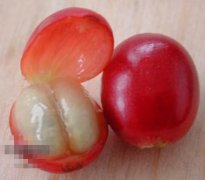
South American coffee history boutique coffee bean species
[Colombia] is the world's second-largest coffee producer, accounting for about 12% of the world's annual output, which is much lower than Brazil's 30% to 35%, but most of them are high-quality mountain-washed beans. Central Colombia is divided into valleys by three north-south longitudinal mountains, of which the central and eastern mountains are the main coffee producing areas. The coffee here is named after the distributed market

Long aftertaste of Salvadoran Coffee Manor introduction to Mercedes Manor
Coffee flavor and quality El Salvador is a producer of high-quality commercial Arabica beans and is famous for its strict and effective quality control. Since 2003, he has joined the COE competition. With excellent ancient coffee, it successfully entered the boutique coffee market.
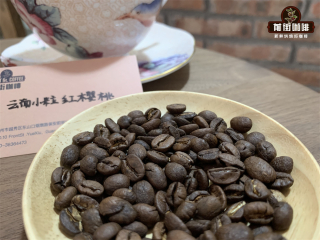
Yunnan small Grain Coffee belongs to Arabica? Yunnan coffee species and flavor and taste characteristics of producing areas
Professional coffee knowledge exchange more coffee bean information please follow the coffee workshop (Wechat official account cafe_style) front street-Yunnan small grain coffee introduction Yunnan coffee cultivation history can be traced back to 1892, large-scale cultivation of coffee is the mid-50th century, but also the first coffee planting base in China

An introduction to the four major producing areas and manors in Guatemala-- the Incht Manor in Minnan.
To really understand the flavor changes and product differences of coffee beans is to understand the production place and growers, different manors with different flavors, or different flavors on different hills of the same manor, and the story behind each coffee bean is what the fragrance wants to know. It can be traced back to which plot of the estate where the beans came from, or which cooperative or which farmer, chasing the flavor of the region. To

Coffee knowledge; seven factors affecting the flavor and aroma of coffee raw beans
Follow Kaiping (Wechat official account vdailycom) found that a good cup of coffee opened in a beautiful cafe depends on the quality of raw beans. As a coffee practitioner, we should open up the pattern and learn more about the whole link of "From Seed To Cup" as much as possible. This is helpful to the link you are engaged in. After all, bakers bake according to beans, while coffee